How to Use a Caulk Gun and Apply Caulk Like a Professional
Caulk applied correctly prevents water damage that costs thousands to repair, seals air gaps that waste hundreds in energy annually, and makes the cosmetic difference between a finished renovation and one that looks like a weekend project. The skill of applying caulk cleanly — a consistent bead in the right width, pressed firmly into the joint, smoothed before it skins over — is learnable in an afternoon.
Choosing the Right Caulk
Silicone caulk provides the best waterproofing and flexibility for bathtubs, showers, and constantly wet joints. It does not accept paint. Latex or acrylic latex caulk is paintable, cleans up with water, and is appropriate for interior trim work and painted surfaces. Paintable silicone or siliconized latex combines the flexibility of silicone with paintability and is excellent for exterior work and trim near water. Match the product to the specific application — using the wrong type is the most common caulking mistake.
Loading the Gun and Cutting the Tip
Insert the tube with the nozzle forward and push the plunger until it contacts the back of the tube. Cut the nozzle tip at a 45-degree angle, starting small — you can always cut more off if the bead is too thin, but you can’t uncut a too-large hole. Pierce the inner foil seal. To stop flow between applications, rotate the rod until the notch faces down and pull back slightly to release pressure and stop the caulk from oozing.
Applying and Smoothing
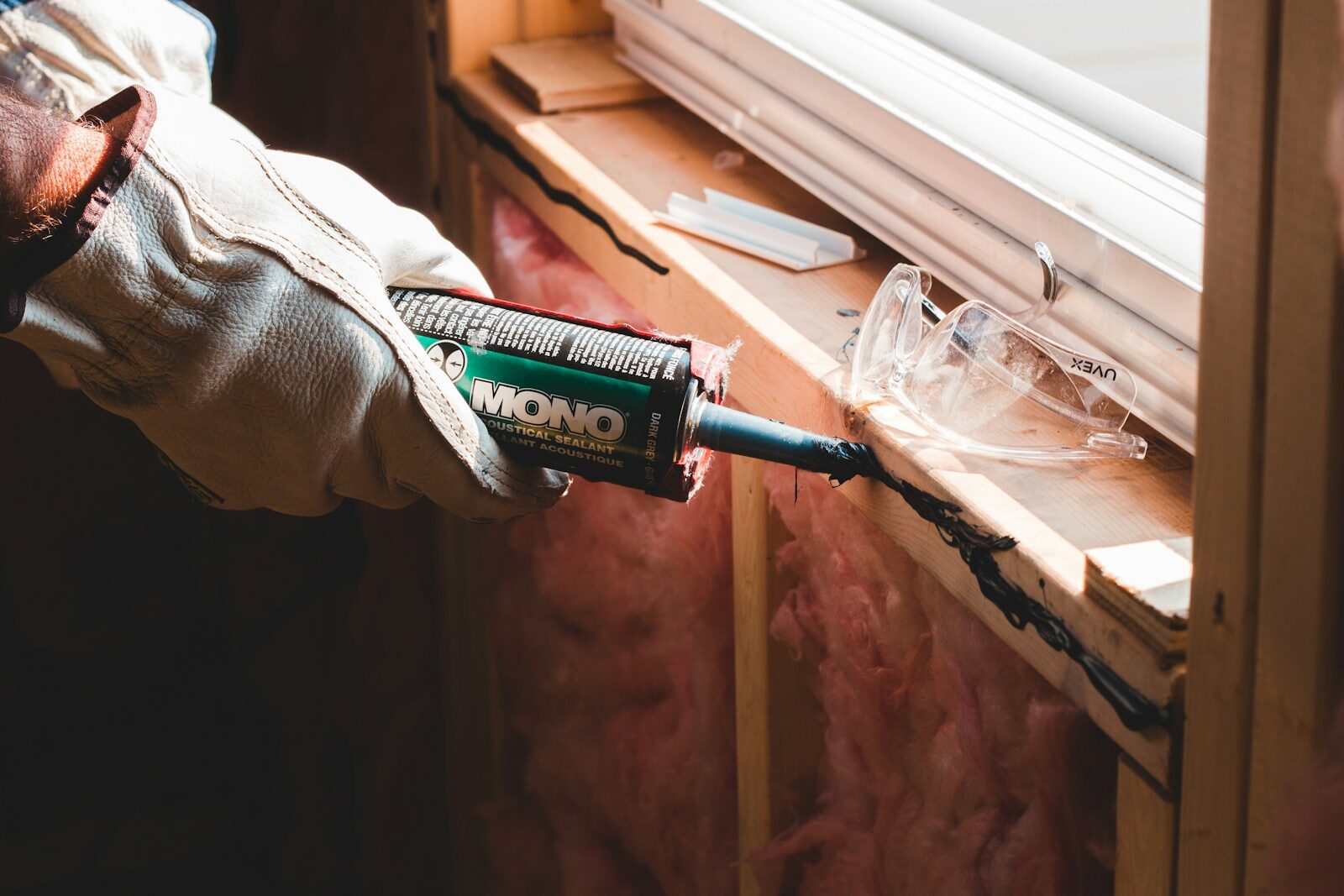
Hold the gun at 45 degrees with the nozzle opening facing the direction of travel. Move smoothly at a consistent speed while squeezing the trigger. Moving too fast produces a thin discontinuous bead; too slow produces a bead that’s too wide. Smooth immediately after application before the caulk skins over — silicone skins in about five minutes, latex in ten to fifteen minutes. Use a wet finger in one continuous stroke, pressing the caulk firmly into the joint. Remove tape immediately while the caulk is still wet, pulling at a 45-degree angle back over itself.